It Can’t End Like This
If violence or exile become our only options, America’s story will end. The only way forward is choosing each other.

A note on the latest news (Jan. 24, 2026): Since I published this essay, the nightmare in Minneapolis has escalated: federal agents shot and killed another person earlier today. While details are evolving, the footage already sharply contradicts the official DHS statement, which claimed agents fired "defensive shots" at an armed suspect who was attacking them. While I must caution that the information is still emerging, what we see already is genuinely frightening.
Prior Update (Jan. 9, 2026): U.S. citizen Renée Good was shot and killed in Minneapolis by an ICE agent, and was immediately labeled a “domestic terrorist.” In MAGA-aligned corners of the internet and media, we see something akin to glee — and an increasing comfort with immigration enforcement agents breaking policy and relying on overwhelming force as the primary tool of control. Protests, barricades, and open discussion of escalation are spreading. Citizens have armed themselves in their neighborhoods.
If you feel angry and afraid, and if you’ve found yourself asking whether leaving the country might be the safest choice, you are not alone; you are not irrational. Those conversations are happening among my own family, friends, and neighbors, and I suspect they’re happening all across the country. I first began writing this piece months ago; I’m updating and posting it today because I still believe there is hope.
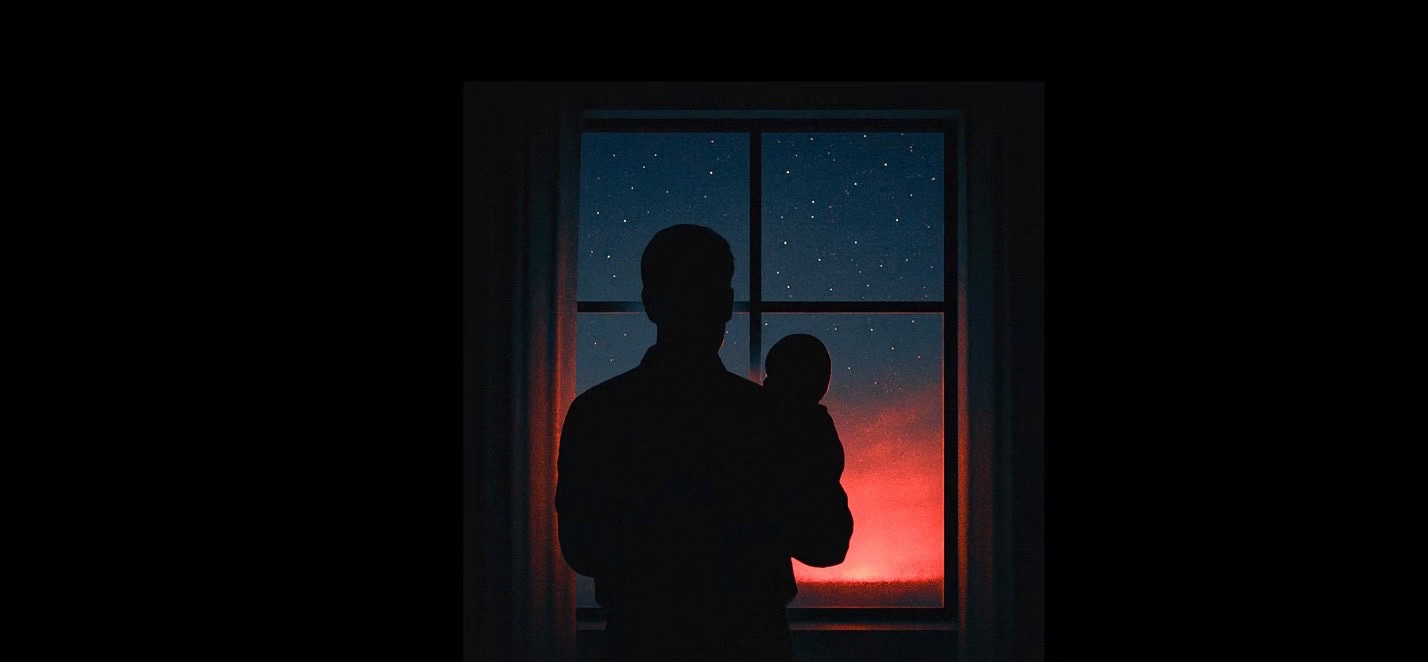
The other night, I held my baby son while Sesame Street’s “I Don’t Want to Live on the Moon” played softly in his nursery. It’s the same lullaby my mother played and sang for me nearly forty years ago, though I never understood why her voice would catch on certain lines, or why tears would gather in her eyes as she sang about missing all the places and people you’d leave behind.
My mother came from Northern Ireland — a Catholic from Belfast who found herself leaving home not by choice but by necessity. She, like so many children of Ulster, sought safety from a broken society whose institutions primed and exacerbated what became known as the “Troubles.”
I understand now that her tears were homesickness: a grief so raw it could be triggered by a children’s song about belonging. She sang that song to me, about Ernie not wanting to live on the moon forever, while her heart was anchored to a home she couldn’t return to.
I won’t accept that for my son. This is our home. This is your home.
At the same time, I have to admit I feel the shadow of her experience lurking, and I know I’m not alone. Neither are you: in quiet conversations, in text threads, in the spaces between what we say publicly and what we now fear privately, American families and friends across the country are asking each other: Should we leave? Can we stay? What’s our red line? When would be the sign that it’s time? Where do we go?
What We’ve Built Together
This country — our country — created Sesame Street. Think about that for a second. In the late 1960s, in the midst of crisis, assassinations, upheaval and division, America decided to pour resources into teaching children of all backgrounds that they were neighbors; that they belonged to each other. There was Mr. Rogers, who looked into the camera and told generations of children they were special exactly as they were. There was Bob Ross, who showed that emotions can create art of magnificent beauty. These weren’t accidents or marketing decisions. They were acts of nation-building through love.
Together, we went to the moon. We cured diseases. We built institutions designed to transform strangers into neighbors, neighbors into citizens, and citizens into guardians of each other’s freedom. For all our failures throughout history — and there have been so many — we persevered through building these small, sturdy bridges between each of us. Public libraries. National parks. The miracle of peaceful transfers of power.
These things were always the most effective counterweight to hatred. They were proof that we could always choose to be more than our worst impulses.
Are we really going to just let all of that vanish?
Our Undoing
I think about Alexei Navalny often these days. After Vladimir Putin’s regime poisoned him, after he recovered in Germany, he faced a choice that seems unimaginable: stay in exile and live or return to Russia and likely die. He chose to go home. He chose to return to a country that had already tried to kill him because he refused to let Putin write the final chapter of Russia’s story. After being immediately arrested upon his arrival home, he later died in a remote prison camp.
To be clear, we’re not there — not yet. But the ground sure feels like it’s shifting, and I bet you can feel it, too.
The grievances, hatred, and animosity that seemed confined to the fringe margins of our politics have now moved to the center stage. White supremacy recruitment happens in gaming forums where our teenagers gather. Christian nationalism wraps itself in the flag we all claim to love. The manosphere turns young men’s loneliness into rage against women, and ultimately democracy itself. And now, from the highest offices and their mouthpieces, we hear the language of retribution, of enemies within, of blood and soil.
I watch the news and see the systematic dismantling — the hollowing out of institutions, the dissolution of USAID and USIP, the loyalty tests, the promises of vengeance. I see the people and institutions who are supposed to protect democracy instead genuflecting before Donald Trump and his MAGA movement’s amassing of power. And I feel something I’ve never felt before as an American citizen: vertigo. The deep, nauseating vertigo of a country that might not catch itself before it falls.
Words vs. Bullets
Things didn’t happen overnight; they’ve been building for some time. Just a few months ago, Charlie Kirk was murdered. Former Minnesota House Speaker Melissa Hortman and her husband were shot to death on their doorstep. Minnesota State Senator John Hoffman was likewise shot alongside his wife, with both miraculously surviving.
Kirk was shot while debating students at Utah Valley University; killed by someone apparently steeped in the very online culture of memes and nihilism that increasingly substitutes for political discourse. The bullets his assassin prepared to kill him bore inscriptions — internet jokes, video game references, and ironic quips; the hollow language of a generation that has learned to mask rage as humor.
I want to be absolutely clear: Regardless of what one thought of Speaker Emerita Hortman, Senator Hoffman, Charlie Kirk, and any of their politics, for each of their children, they were simply mom and dad. No child on the face of this earth deserves that their last image of a parent be what we saw in those videos from Utah. No child deserves to learn that their worst fears about their parents’ safety have come to pass. And no one deserves death for speaking a political opinion, however inflammatory; for casting a legislative vote; for advocating on behalf of causes and people important to all of us; or for speaking truth to power.
Hortman never wavered from her beliefs and advocacy. Kirk built his brand wading into debate (even when it appeared to be only rage-bait theater for his followers). The growth of his following, however, does show us something important: young Americans crave dialogue – even messy, confrontational dialogue.
And what they’re getting instead is online algorithmic rage, ironic nihilism, propaganda, and violence-worship. The response to Kirk’s murder on the far right was both predictable and terrifying: at his memorial service, Stephen Miller shouted that opponents of the MAGA movement were “nothing! … you can build nothing! … we are the ones who lift up humanity!” – language chillingly reminiscent of Nazi propagandist Joseph Goebbels.
Just days later, President Trump signed a sweeping executive order directing federal law enforcement to investigate, disrupt, and dismantle entire networks of so-called domestic extremists and terrorists — a term his administration has applied to “antifa” activists, left-leaning movements, transgender individuals, immigrants, protestors, and even the Democratic Party itself.
Immigration enforcement operations across the country – and the recruitment videos for their work – have leaned into the same aggressive, angry, jingoistic language tone that’s also been pushed in DHS’s recruitment posts of social media (which include white nationalist imagery), all while adopting the domestic terror language from Trump’s order.
The rhetoric, policy, and predeterminative announcements after violent incidents now reinforce one another to broadcast a single, unmistakable message: dissent is treason, especially from Americans who are diverse, different, “other.”1 This is the playbook: to redefine dissent and even the mere existence of marginalized identities as abnormal, dangerous, and violent criminal enemies of the nation.
This rhetoric echoes the same us-versus-them framing deployed against Catholics in Northern Ireland during the 1960s and 70s by Rev. Ian Paisley, a Christian nationalist extremist whose fire-and-brimstone screeds drove stochastic terror and hastened Northern Ireland’s descent into the zero-sum ethno-sectarian conflict my mother left. The danger our democracy faces today is the same: just as Paisley’s extremism turned religion into a weapon of division, Trump, Miller, and their allies are working to fuse culture-war grievances into categories of treason, accelerating a spiral that history shows can only end in violence. And while these narratives are being manufactured from the top down, the violence on the ground continues.
Northern Ireland shows us what happens next: the cycle accelerates. Violence begets enraged calls for vengeance. Which will beget even more violence. Rinse, repeat.
This is how democracies truly wither and die. Not in dramatic coups, but in repeated and self-inflicted spirals of reciprocal hatred and fear that will make normal politics impossible.
Lessons of Inherited Trauma
My mother never meant to pass down her pain, but trauma has its own unique laws of physics. I learned to keep essential things where I could find them at a moment’s notice, to have a go-bag mentally packed, to know which friends would help and which would turn away. I learned these things through osmosis, through the quiet anguish of someone who had already lost one home, and who witnessed countless neighbors lose theirs.
But I also inherited something else from her: the fierce love of someone who chose to build a life in the place that gave her refuge. She became a citizen with the devotion of someone who knew what it meant to join a country that would embrace you back. She voted in every election — school board, municipal, midterm, primary — with the reverence of someone who knew what it meant to have no voice at all.
This is what the fascist movement wants to steal from us: not just democracy as an abstract system, but democracy as a lived experience, as the daily practice of belonging to each other.
The Darkness Before the Dawn
I would be lying if I said I wasn’t afraid. I am heartsick watching neighbors turn fearful of threatened and actual government action against our city and others, and watching friends and family disappear into information silos that make us strangers to each other. This year’s assassinations drove home everything I’ve feared — that we’re moving from verbal violence to actual bullets; from metaphorical enemies to literal targets.
I am devastated by the apparent ease with which our nation’s hard-won progress is evaporating. Some mornings, it’s hard not to let the despair wash over me. Not knowing what will happen next can be — and is, by Miller’s evident design — a terrifying form of cruelty.
What I do know, however, is that violence is not the way forward. It never has been. It never will be. Violence doesn’t win arguments. Violence doesn’t change minds, it hardens them into hatred and vengeance. Indeed, it appears that violence is what hard right ideologues are counting on, because it would justify doing everything they want to do next to amass more power.
Steve Bannon has repeatedly said that he seeks to flood the zone with conspiracies, lies, draconian policy directives, violent rhetoric, and hate. Instead, we — Americans who love democracy — must flood our civic spaces with something even more powerful: belonging, trust, and a radical belief in one another. We must flood the zone with ourselves. Show up for school board meetings and neighborhood associations. Check on your neighbors, especially those who are most vulnerable. Create art that reminds us who we can be. Tell your stories that complicate the simple narratives of division. Welcome newcomers with the hospitality that says, “this is your home too.”
To young people especially, I say this: find your Venn diagram –– your overlap –– with each other and with everyone you meet. We all have one. And finding it means the difference between seeing someone as an enemy or as a neighbor. Even, possibly, a friend. Lead with empathy, especially toward those who say they consider you an enemy.
I write this as someone who has lived on multiple sides of American public life. I served as a Peace Corps volunteer, as a police officer, and in federal immigration and national security policy. Service taught me that countries aren’t saved by one speech or a single election cycle. They’re saved by ordinary people doing unglamorous work in concert, choosing principle over performative anger, and protecting the boring machinery that lets us disagree peacefully.
What Survives
We have been better than our current moment before, and we have been worse. We have failed to live up to our ideals so many times it would be laughable if it weren’t so tragic. But the astonishing thing — the thing that makes America worth saving — is that we keep trying to be better. Not in a straight line, not without devastating setbacks, but by firmly and steadily working to bend our future’s history toward justice.
Our children need us to stay engaged even when engagement feels futile. They need us to keep believing in the America that sends Big Bird to comfort them, that funds scientists to cure diseases, and maintains parks for everyone to find peace in nature. They need us to protect these things with the understanding that democracy isn’t just about voting—it’s about the ten thousand small acts of citizenship that happen every day between elections.
To those considering leaving, I understand. The math of safety is different for everyone, and no one should judge another’s calculation of risk. But for those who can stay, who can afford to stay, I believe we must. Not because America deserves it — in many ways, you could argue it doesn’t — but because the future does.
I think of my son. I think of you and your children. I think of the children of those who came here believing in the promise we made to the world’s huddled masses about freedom and opportunity and belonging. I think about the stories we’ll eventually tell about this time. Will we say we gave up when things got hard? Will we say that we walked away while allowing the worst of us to write our national ending? Or will we say that in our darkest hour, we remembered who we were supposed to be?
This is the Nation We Choose
Last night, after my son fell asleep, I played that Sesame Street song again for myself. I let myself feel the full weight of my mother’s tears, the fear of displacement, the mental exhaustion of constant, endless, vigilance. And then I made a choice — the same one I’ll make tomorrow and the day after that.
This cannot be how our story ends. Not with bullets inscribed with memes, not with enemy lists, not with political violence becoming a routine part of our lives. Whatever your politics, and whatever you think of those lives lost, their children deserve far better than that. All of our children do.
America’s story, our story, continues with every act of neighborly love, every moment of chosen courage, and every refusal to let cynicism win. It continues when we show up for each other despite our exhaustion. It continues when we teach our children that democracy is not something you have but is something you must do.
Political predators want us to believe that our ending is already written. They want us to believe in their inevitability, that resistance is futile; that the future belongs only to them. They want us to despair, to give up, to run away.
But if Navalny’s sacrifice in Russia taught us anything, it’s that home is worth fighting for, even when —especially when — the obstacles seem impossible.
So: we stay. We organize. We march, advocate, donate, and vote. We love each other fiercely and publicly. We make art and tell stories and sing lullabies that remind us of who we are and what we’re protecting. We do the slow, unglamorous work of democracy: showing up, bearing witness, building bridges, and refusing to let our neighbors face these dark times alone. We refuse to become each other’s enemies, and we refuse to permit anyone anywhere to tell us who’s worthy of our love.
Do it for your family, friends, children, and communities. Do it for your future and for theirs. Do it for those who dare to dream of one day calling you their neighbor.
And, most of all, do not go gentle into that dark night. The dawn will come. It always has. I believe it will again. And when it does, we’ll still be here, still home, still writing the next chapter of a national story that refuses to end in this darkness.
The United States of America is our home — all of it: the beauty and the brokenness, the hope and the pain, the promise and the peril. And I’ll be damned if I just give up on it.
Not like this. It can’t be allowed to end like this.
And it won’t. Not if we have anything to say about it.
https://www.esquire.com/news-politics/a69948799/fox-news-renee-good-minneapolis-ice-reaction/ ; https://www.thedailybeast.com/fox-news-host-jesse-watters-slammed-over-hateful-comments-about-mom-renee-good-killed-by-ice-inminneapolis/
This is a masterful essay. Thank you for your work on it and sharing your family’s experience as evidence. The threads that weave through this seem to hit on some of the key threats and stressors; a couple: the US govt. association now with the brutality of Putin’s mafia control and banal cooperation with MBS of Saudi Arabia, and the reality of inherited trauma passed down through home life despite focus to prevent it. Those clear associations induce fear that we Americans could be as vulnerable to abuse & exploitation as residents in any autocratic nation. It’s a deliberate destabilizing move that’s part of overall mafia extortion pressure campaign on all of USA. All of this is amplified by algorithmic buzz generated by what effectively is fascist mafia state oligopolist manipulation. <> With such a large % of US population getting news through social media and corrupt monopolization of mainstream media, the cognitive sovereignty of many Americans is debilitated, leaving people effectively colonized by the owners of digital information. It’s been a decades-long process that seems matured and self generating now. <> But how did our national security become so captured that one man, Elon Musk, a confidant of Putin seems to have the ability to shut down critical space based communication at any time? Most Americans are aware of the vulnerability of our digital infrastructure to manipulation; bad actors being at times, inside critical utility grid control systems and individual plant operating control systems for years. This is part of the insidious background destabilization that many people know can be used to halt our ability to defend ourselves or even continue running modern infrastructure. In a way, this seems similar on grand scale to inherited trauma.